AI Agent Placement Inside Operational Workflows
Where an agent sits in your workflow matters more than how capable the model is.
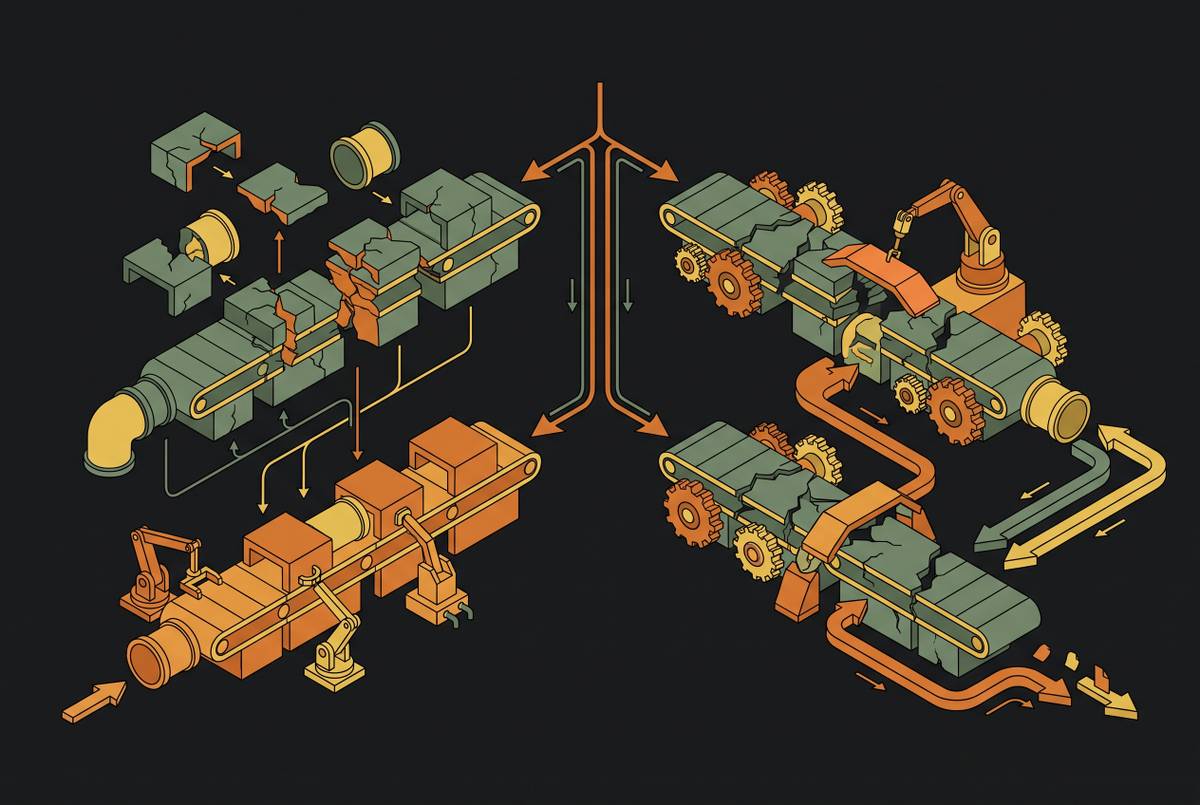
An impressive AI agent demo almost always shows the same thing: a system that reads a query, pulls together information, and returns a clean summary. That is not what operational impact requires. The workflows that actually change when an agent is introduced are the ones where the agent sits at the point where the process branches, where a decision gets made that sends work down one path or another. Most enterprise AI agent deployments that fail do not fail because the agent lacks capability. They fail because the agent was placed at the wrong point in the workflow, or because it was attached to a workflow that was never redesigned to make room for it. That is the central claim this piece works through, and it reframes the question most organizations ask. Buying the right AI agent or finding the most capable underlying model is not the question. Where, inside a running operational process, the agent's actions actually change the outcome is the question.
The distinction between an AI assistant and an AI agent matters here in a way that is easy to state but consistently ignored in deployment planning. An AI assistant responds to a prompt and waits for the next one. An enterprise AI agent executes multi-step workflows, triggers actions across systems, escalates approvals, and coordinates tools without needing a person to restart it at every step. Placing an agent built for that kind of multi-step execution into a slot that only needs prompt-response behavior wastes the investment in the architecture. It also creates governance exposure, because the organization has deployed a system with broader authority and action capability than the task in front of it requires, without the oversight structure that level of authority demands. Getting this distinction wrong at the placement stage is not a minor inefficiency. It sets the terms for everything that follows: how the agent is scoped, what it can touch, and whether it ever earns the trust needed to expand its role.
What the pilot-to-production failure rate reveals about misplaced agents
Most enterprise AI agent pilots never reach production, and the pattern behind that failure rate traces almost entirely to operational and governance gaps rather than limits in what the underlying models can do. That is a significant fact on its own, because it means the industry's dominant bottleneck right now has nothing to do with model quality. The dominant reason a pilot stalls is that it was designed around a clean, curated test environment and a workflow that was never rebuilt to support agentic execution once the agent left that controlled setting and met the organization's real systems, real data latency, and real exception volume.
Four causes drive the gap between pilot and production: legacy system integration debt, process design that was never rebuilt to fit agentic execution, governance infrastructure that gets built only after deployment instead of before it, and evaluation infrastructure that is simply absent at launch. Each of these points to a different fix, and an organization that misdiagnoses which one is actually stalling its rollout will spend months addressing the wrong problem. The integration failure deserves particular attention because it is a placement failure wearing a technical disguise. Enterprises frequently select a use case based on the business value it promises without first checking whether the systems the agent needs to touch can actually support agentic access patterns at production volume and quality. The agent gets placed where it looks valuable on a slide, not where the surrounding systems can support it operating at scale.
The consequence of starting in the wrong place compounds beyond the failed pilot itself. A stalled or embarrassing deployment builds organizational skepticism that makes the next AI initiative harder to fund and harder to get buy-in for, regardless of how well-designed it is. Use cases chosen because they look impressive in a demo room tend to be operationally unpredictable and difficult to govern once they're live. The workflows that hold up in production are repetitive, clearly scoped, measurable, and straightforward to govern. An agent placed at a high-value but poorly scoped decision node will stall in governance review long before it reaches scale, no matter how capable the model behind it is.
Where an agent belongs in a workflow
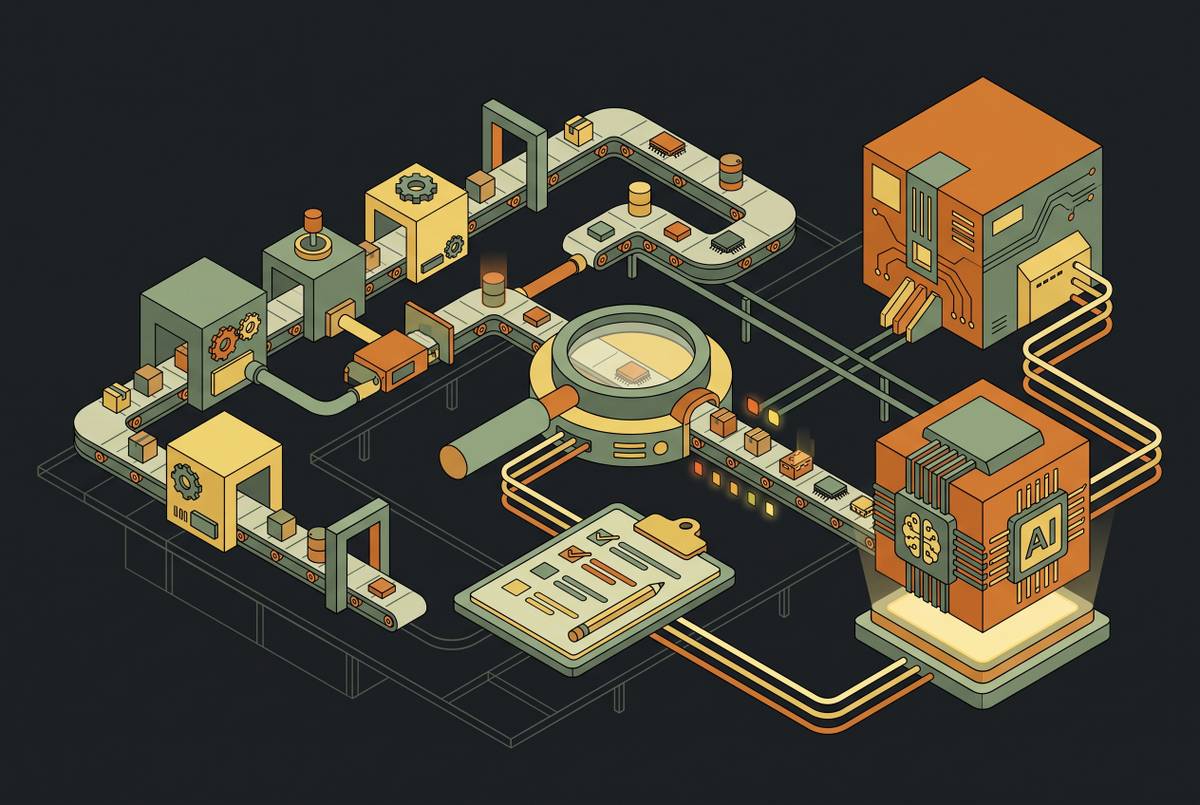
Finding the right placement starts with mapping the workflow at the level of decision nodes and handoffs, not at the level of tasks or job titles. Job titles describe who does work. Decision nodes describe where the process branches based on an input: approve or reject, match or mismatch, within threshold or exception. That is where an agent's ability to evaluate information and trigger a downstream action actually changes what happens next, making it the right unit of analysis for placement because it is where outcomes get decided.
Handoffs deserve equal attention. A handoff is any point where work moves between people, systems, or departments, and handoffs are where information gets lost, delayed, or quietly degraded on the way from one party to the next. An agent placed at a handoff can maintain continuity across that transition in a way that human coordination, dependent on someone remembering to forward an email or update a shared spreadsheet, cannot reliably provide.
The mapping exercise itself follows three steps. First, walk the process as it actually runs today, not as it appears in a process diagram someone built two years ago. Second, identify every point where a human is making a judgment call based on data: approving a budget line, releasing a shipment, flagging an exception. Third, for each of those points, ask what data drives the decision, how reliably that data arrives, and what happens downstream if the decision turns out to be wrong or late. Those three questions, applied consistently, are what separate a defensible placement decision from a guess.
Three sectors illustrate the same underlying logic playing out in different operational settings. In construction, project managers routinely approve commitments without seeing current budget consumption, finance teams reconcile invoices after the work is already done, and change orders get tracked outside the core project system. Each of those is a decision node, and where an agent sits relative to it changes what information is actually available at the moment the decision gets made.
In logistics, agentic systems make decisions, adapt to new information, and coordinate multi-step sequences without waiting for a person to approve each step along the way. The placement question in this setting is which multi-step sequences are currently bottlenecked by the time it takes for a human to coordinate across them.
Supply chain and manufacturing offer the clearest documented example of placement done right. At a global consumer goods company facing pressure on volume and service levels, supply chain managers equipped with AI agents turned replenishment from a reactive process into a proactive one. Administration costs fell 40 to 60 percent, BCG's analysis found, and stock movement decisions, including distribution-center-to-store transfers and expedited orders, became noticeably more creative and responsive. The agent was placed at the point where the replenishment decision actually gets made, not one level up, summarizing inventory reports for a manager to read afterward.
The Autonomy Boundary as a Placement Decision
Once a decision node has been identified as the right place for an agent, a second question follows immediately: how far does the agent's authority extend from that position before a human has to step back in. That boundary has to be drawn before the agent is designed, as part of its initial architecture rather than as a compliance layer bolted on afterward.
For high-risk operations, issuing a refund above a certain dollar threshold, modifying a production cluster, finalizing the terms of a legal contract, the agent should be built to halt execution and request explicit manual approval before proceeding. That human-in-the-loop mechanism is what allows the bulk of routine workflow steps to run fully automated while keeping the decisions with the highest consequence under direct human review. Drawing that boundary is a process architecture choice with real operational consequences in either direction: draw it too tight, and the agent loses most of the operational value that justified deploying it in the first place; draw it too loose, and the organization is exposed to cascading errors the agent has no way to catch or correct on its own.
The stakes here differ sharply from consumer AI. A consumer-facing assistant can hallucinate occasionally, and the worst realistic outcome is a wrong answer to a question. An enterprise AI agent has to be useful, but it also has to be governed, audited, compliant, observable, integrated with the systems already running the business, and able to operate at scale without a developer watching every action it takes. The autonomy boundary is exactly where those governance requirements become concrete: it is the line that determines what must be logged, what must be reversible, and what must wait for a person.
Multi-agent systems complicate this further. In a supervisor-worker architecture, a supervisor agent breaks a request into sub-tasks and delegates them to specialized worker agents, then synthesizes their output into a final result. The autonomy boundary in that structure has to be set for the system as a whole, not agent by agent, because a worker agent can take an action that exceeds what the supervisor ever intended to authorize. Setting the boundary correctly before deployment is also the cheaper path by a wide margin: governance added onto a production system after it is already running at scale is far more disruptive, and far more expensive, than governance designed in from the start.
Failure Modes That Compound Through the Workflow
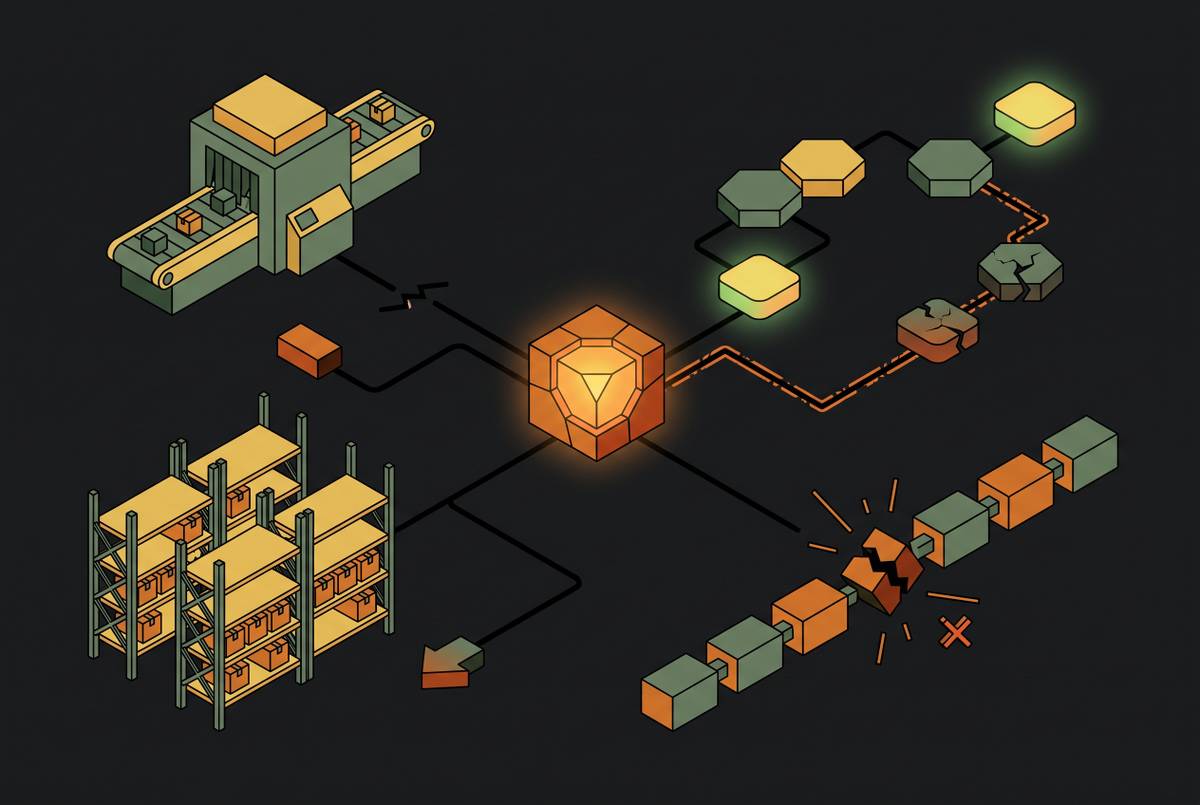
An agent placed at the wrong point in a workflow does not simply underperform. It introduces failure modes that spread downstream, frequently without a human noticing until well after the damage is done. A tool call made with an incorrect argument, the wrong tool selected for the task, or a tool error that goes unhandled while the agent proceeds as though the call had succeeded: any one of these at an early step can silently corrupt every later step that depends on that output. A malformed argument at step two does not announce itself, instead producing a wrong answer three steps later that looks, on the surface, like a correct one.
The risk grows with scale. As agent networks become more complex, the failure is rarely a clean stall. Agents can spiral into feedback loops, produce false consensus among themselves, and exhaust an entire API budget within minutes.
The 2026 Singapore Consensus on AI Safety lays out ten foundational principles for managing this category of risk: least privilege, traceable identity, auditability, validated deployment, adversarial resilience, multi-agent stability, runtime assurance, interruptibility, legibility, and human oversight. Each of these, at its core, is a constraint on where an agent can be placed and how far its autonomy can extend from that position. Least privilege translates directly into a placement rule: an agent placed at a procurement decision node should have read-write access to procurement data, not to financial close records or HR systems. The placement decision defines the access perimeter, and that perimeter defines how much damage a single failure can do. Interruptibility works the same way. If a workflow cannot be paused at the agent's decision node without corrupting the state of everything downstream, the workflow was not ready for an agent to be placed there. That is a check to run before placement, not a feature to patch in once something has already gone wrong.
What process redesign requires before an agent is placed
Getting placement right requires redesigning the workflow before the agent is specified; that redesign is the substantive work that determines deployment success. In procurement specifically, AI projects succeed only when the full source-to-pay workflow is redesigned end-to-end, with roughly 70 percent of the total effort going into people, organization, and process redesign. That ratio is a useful corrective for any organization planning an agent deployment around a technology selection process and treating the workflow questions as something to resolve afterward.
The redesign work follows directly from everything the preceding sections establish. It means mapping decision nodes and handoffs as they actually operate today, not as they appear in outdated documentation. It means applying a governability test alongside a value test, so that an agent is not placed at a decision point that looks valuable in a pitch but cannot survive a governance review. It means setting the autonomy boundary as part of the initial design, with clear rules for what triggers a halt and a request for human approval, rather than retrofitting that boundary once the system is already live and harder to change. It means building in the access perimeter the least-privilege principle demands, so the blast radius of any single failure is scoped to the decision node the agent actually occupies. And it means confirming, before deployment, that the workflow can be interrupted at that node without corrupting the steps that come after it.
None of this is optional groundwork that a sufficiently capable model can substitute for. The organizations getting measurable results, the ones cutting administration costs by 40 to 60 percent or freeing up significant buyer capacity, are the ones that treated the decision-node map as the actual deliverable and the agent as the thing built to fit it.
Sources
- AI-First Procurement: How Autonomous Agents Drive Competitive Advantage
- Autonomy and Agency in Agentic AI: Architectural Tactics for Regulated Contexts
- Updating the taxonomy of failure modes in agentic AI systems: What a year of red teaming taught us
- Taxonomy of Failure Modes in Agentic AI Systems - v2.0