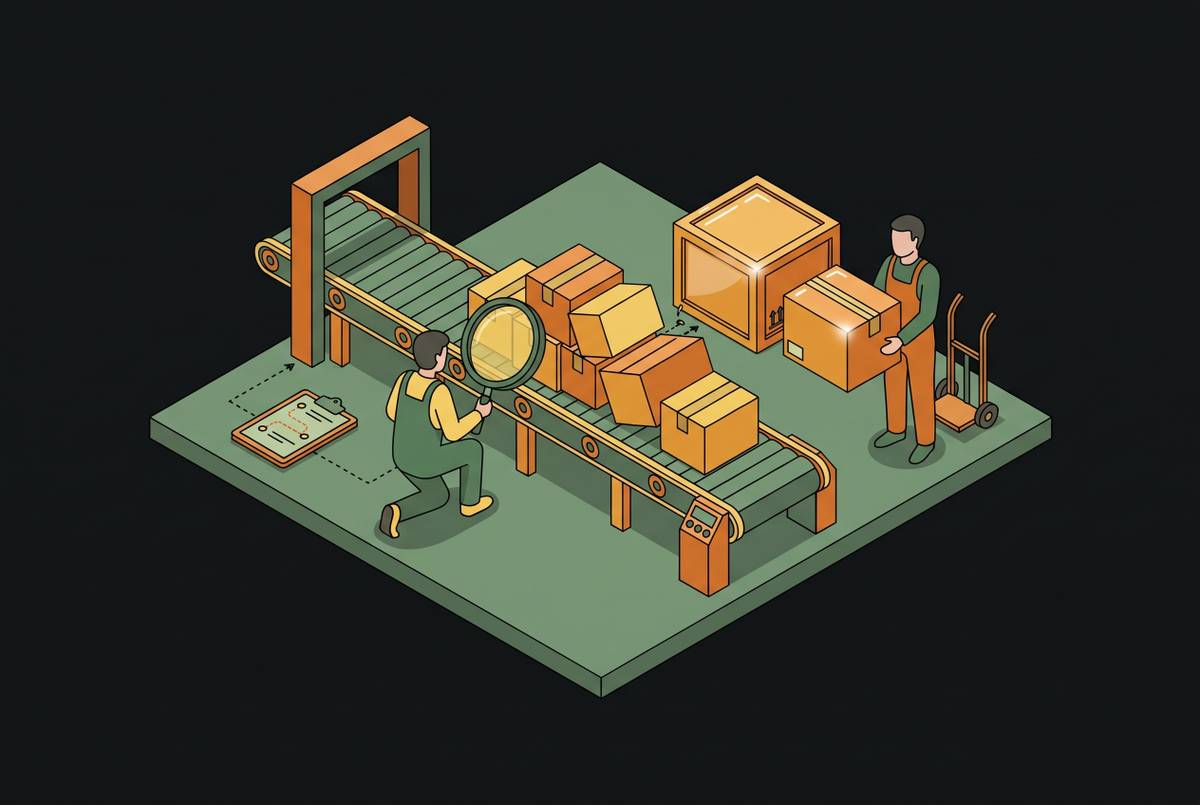
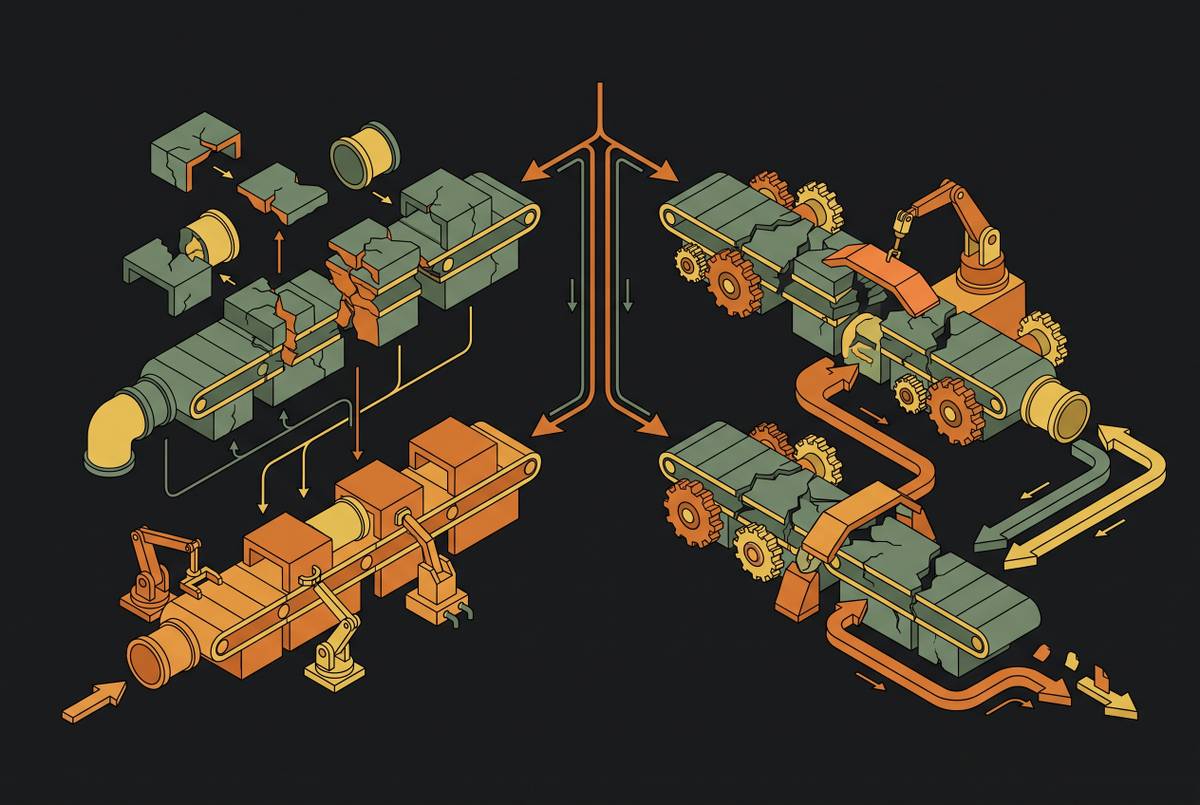
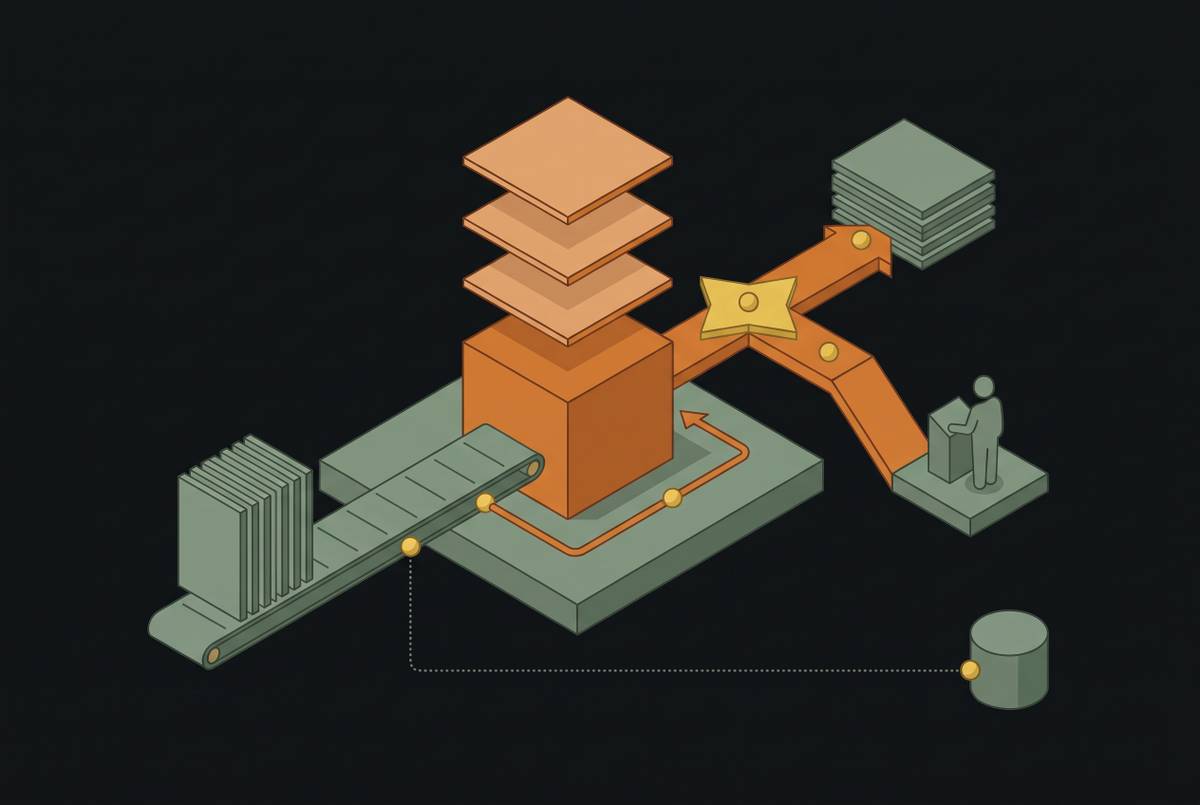
The Diagnostic Signal That Tells You Automation Is Preserving the Problem Not Solving It
Staff manually copying AI outputs between systems shows a broken process.
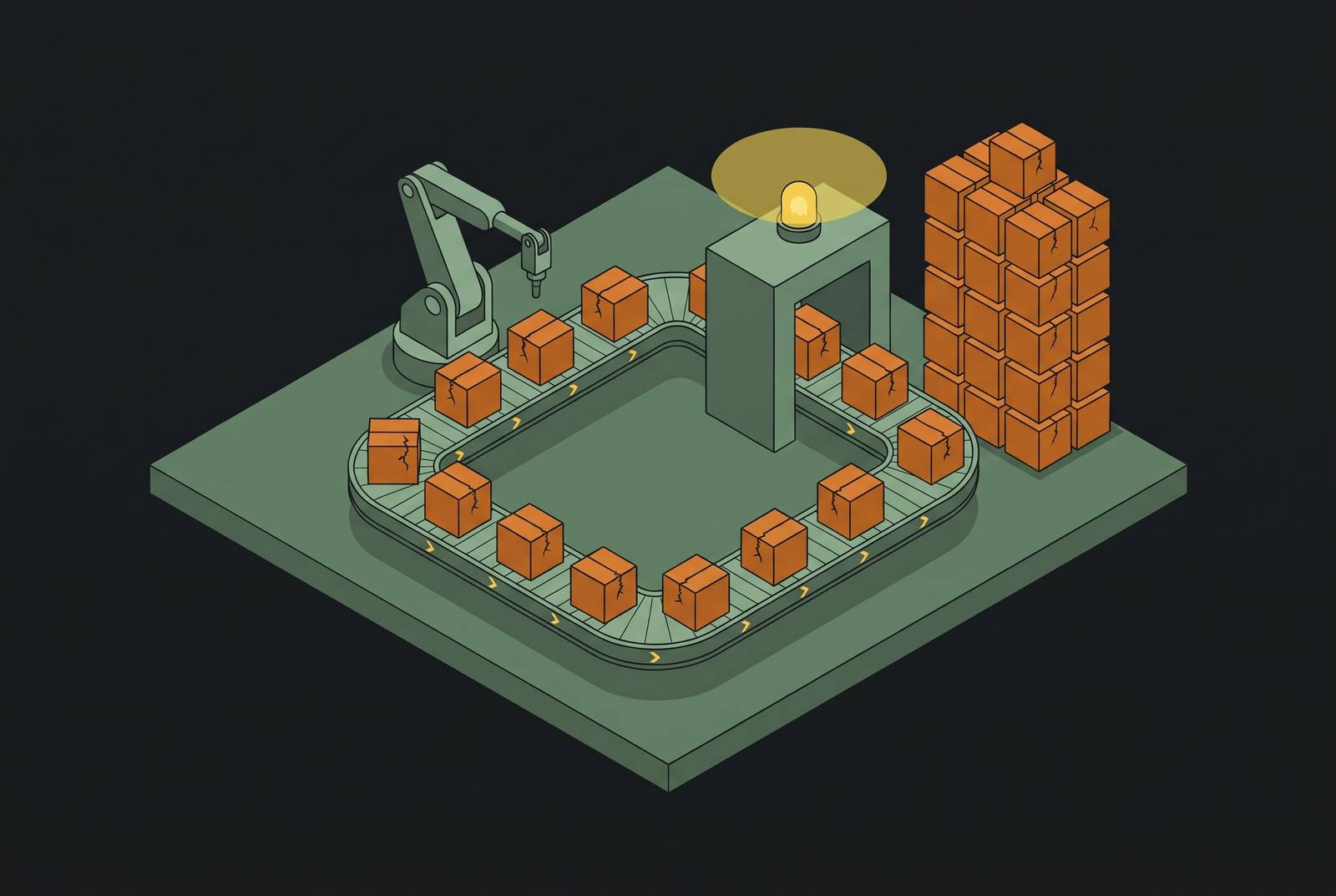
Rebuilding department workflows with AI agents from scratch starts with evidence of how the work runs before tools are chosen. The diagnostic signal is a faster workflow with no better downstream outcome, made visible when users still copy AI outputs manually into another system. That behavior should stop deployment until the sequence and its integrations are rebuilt, before a later post-mortem.
Why automation so often accelerates a process without improving its outcome
The agent is deployed, tasks complete faster, and the outcome the department cares about has not moved. The technology may be doing exactly what was requested. The failure lies in placing a capable agent inside a broken sequence, then judging success by the speed of the task while overlooking the result of the process. Higher throughput feeds the same downstream obstruction. The organization has accelerated the arrival of work whose purpose remains unfulfilled.
A Wharton professor and a University of Washington professor catalogued this failure in September 2026. Their account describes agents that accelerate tasks without adding value, create negative outcomes that go uncounted, ignore the end-to-end flow, and optimize metrics that were never the point. These are failures of process design and evaluation.
McKinsey finds that high performers “fundamentally redesign workflows that are enabled by AI rather than insert AI into existing ones”. Deloitte’s 2026 AI Pulse Check found that nearly half of organizations had introduced AI without redesigning the underlying workflows or roles. Only a small fraction reported redesign at scale with a new operating model. The contrast is between changing the work and accelerating its existing arrangement.
The specific signal that tells you automation has locked in a broken process
The primary behavioral signal is manual copying between systems. A user takes an AI output and transfers it into the downstream system where the work must continue. The AI has become another data-entry source. It may generate its output faster, but a person still has to bridge the gap between generation and use. Where that transfer adds work rather than removes it, the claimed workflow improvement has not reached the workflow.
This behavior exposes two failures at once. The process was not redesigned end-to-end, and the integration architecture was not built to close the loop. The distinction is important because neither failure is resolved by improving the quality of the generated output alone. Even an accurate answer can leave the operational sequence untouched. The user remains responsible for moving it into the place where it can have an effect.
Camunda’s AI Process Gap report found that a significant share of employees had manually overridden AI outputs because the underlying process was not set up correctly. A third said AI had increased their workload. Those findings are consistent with the same fracture between local automation and end-to-end work. Approvals treated as formalities, reconciliations that do not investigate differences, and controls bypassed through offline activity reinforce the diagnosis. They are not separate reasons to create a warning-sign inventory, but evidence that the formal workflow and the working process have diverged.
What field evidence reveals that declared process designs conceal
The gap persists because the declared process is easier to encode than the operating process. Documentation shows the approved steps, while production relies on people to make manual overrides, decide things offline, and coordinate informally. Automation can faithfully reproduce the documented sequence without reproducing what makes work possible. The design looks complete on paper alone. The missing work becomes visible only where people compensate for it.
Suffolk Construction and MIT’s September 2026 whitepaper describes this fault in how construction scheduling works. No single scheduling system currently spans GCs, subcontractors, procurement teams, and field. Teams also report field events after the fact, leaving AI models to reason over stale data. The problem therefore extends beyond the quality of a scheduling tool. The tool’s view of the project is split among the people involved and lags behind the work.
That division explains why a better schedule does not necessarily make critical work ready to start. Materials may be incomplete, predecessor work unfinished, or crews and equipment unavailable. Inspections may not be scheduled, and field decisions may arrive too late. Schedule-layer AI does not resolve those missing conditions. Predicting when work should happen and establishing whether it can happen are different operational tasks.
Logistics exposes a similar gap across disconnected platforms, with the coordination burden concentrated in exception handling. That is where automation is weakest and manual transfer most often appears. Manufacturing presents the related problem of heterogeneous sensing and control systems that must work together. An audit of the tools in any of these settings can miss what the work depends on. Behind the visible workflow, people keep systems and decisions connected.
Why process audits must follow operating evidence, not documented design
A process audit limited to documents and interviews with process owners is likely to ratify the declared design. An operating audit follows what people actually do between recorded events. It examines where they leave the system, what they transfer manually, and whether scheduled controls perform their stated function. One approach assesses the prescribed sequence, while the other establishes the sequence automation would actually enter.
Grant Thornton’s construction AI analysis describes how this distinction becomes decisive at scale. A firm may test a tool on a project with consistently updated schedules and reporting, then apply the same model across a portfolio whose projects structure schedules and track progress differently. The promising pilot does not establish a sound data foundation for the portfolio. An assessment that assumes other projects work like the pilot can miss these differences before the tool is used more widely.
The AI Builders Network’s 2026 session From Risk Scores to Field Action defines a more operationally complete construction capability. It must identify the specific missing condition, connect it to accountable owners and due dates, and preserve field judgment as reusable organizational knowledge. The distinction is between predicting lateness and determining whether the next critical work package is ready to execute. That distinction also gives the audit a concrete target. It must establish whether the information and accountability needed for action exist in the actual process.
The 2026 Roadmap on Artificial Intelligence and Machine Learning for Smart Manufacturing identifies integration with heterogeneous sensing and control systems as a critical barrier. Its implication for assessment is to map actual data flows rather than assume that documented connections describe working ones. Documentation lag is not proof of organizational incompetence. Complex operations evolve faster than their documentation, making the gap a structural condition that an audit must expect.
The organizational reason broken processes get automated instead of rebuilt
Redesign is not simply the obvious option that organizations inexplicably refuse. It has political costs that a tool deployment can avoid. Camunda found that most organizations said adding AI to existing processes creates less internal resistance than redesigning them. A deployment can be scoped, budgeted, and demonstrated inside a quarter. Redesign requires cross-functional ownership, disrupted accountability, and a longer payback horizon, making the easier choice rational in the short term.
The difficult handoffs also exist for reasons beyond technology. Approval authority, liability, and departmental budgets determine who can act and who must accept the consequences. An agent does not dissolve those boundaries. KPMG’s January 2026 survey found that a majority of large-company leaders cited agentic system complexity as the top barrier to scaling agents. Unremoved organizational handoffs explain why installing more capable technology does not by itself simplify the sequence.
The strongest objection to a process-first approach goes further. In complex operations, a process cannot be fully mapped before automation, and deployment may expose failures that no prior audit would have found. That objection has a legitimate but limited scope. RAND’s interviews with practitioners across a large sample of AI initiatives found that the overwhelming majority of the reasons they gave for failure had to do with leadership. The finding suggests that decisions made before deployment could prevent many failures, even though some may only come to light in production.
The practical standard is not perfect foresight, but attention to failures that are already knowable. Camunda also found that nearly half of organizations had rolled back AI use after it negatively affected employees’ ability to do their jobs. That rollback is the deferred price of avoiding the organizational work at the outset.
How the stakes change when agents move from reporting to executing
A reporting layer can show process debt without acting directly on it. An agent that executes work carries that debt into the decisions it makes. The distinction raises the cost of unresolved data quality, integration, and exception-handling problems because outputs no longer wait solely as recommendations for a person to interpret. Execution makes the underlying design more consequential. Once the agent acts through the process, failures are harder to trace and undo.
The mechanics of those failures include invoking the wrong tools, misinterpreting enterprise policies, and losing context integrity. Missing or corrupted data can cascade into bad decisions. In this framing, these are downstream consequences of a process whose foundations were never rebuilt for agentic execution. Making the agent better leaves those foundations as they were. To execute work, the agent needs the surrounding system to provide the data, connections, and exception logic.
Gartner predicts that more than two in five agentic AI projects will be canceled by 2027. That prediction is consistent with a deployment problem in which organizations introduce agents before building the process infrastructure they need. As agents take on execution, the earlier copy-paste signal calls for a closer look. A gap previously bridged by a person is not automatically resolved when responsibility moves to software.
Oracle’s 2026 construction analysis predicts a wide gap in results between organizations that rely on experience alone and those that combine it with data-driven intelligence. It identifies leaders as those treating data as their most valuable asset. Operating knowledge becomes part of the foundation on which automated action depends.
How to rebuild department workflows with AI agents from scratch
Recognizing the signal before deployment requires making the workflow audit the first deliverable. It cannot remain a preliminary exercise that disappears when timelines compress. For a department rebuilding its operations, the starting question is where work leaves one system before reaching the next. That question locates the manual bridge already doing the work that automation claims to replace. It also directs attention away from isolated tasks and toward the sequence that produces the department’s outcome.
The corresponding discipline is to follow a live transaction through its actual path. Every point where a person touches output before it enters another system belongs in that account, including approvals that proceed without investigation and reconciliations that finish without resolving differences. The purpose is to distinguish necessary judgment from compensating work, so that the rebuilt process addresses the reason for the handoff and generates its input faster.
A rebuilt process provides an operational sequence beyond the interface: it connects a missing condition to accountable owners and due dates, supports recovery actions, and preserves field judgment for later use. For a department choosing outside help, the same distinction provides a concrete criterion. The first deliverable should establish how work will reach its outcome, rather than stop at a demonstration of what an agent can generate.
The timeline also distinguishes redesign from roadmap theater. An audit that surfaces the signal and produces a rebuilt first process within weeks demonstrates a different commitment from one that ends with a roadmap and platform strategy. The operational standard is the willingness to let that evidence stop the launch, change the sequence, and begin automation from a rebuilt foundation.