Premature Certainty as a Construction Delivery Risk
Defending approved budgets and schedules masks real delivery risks until projects fail.

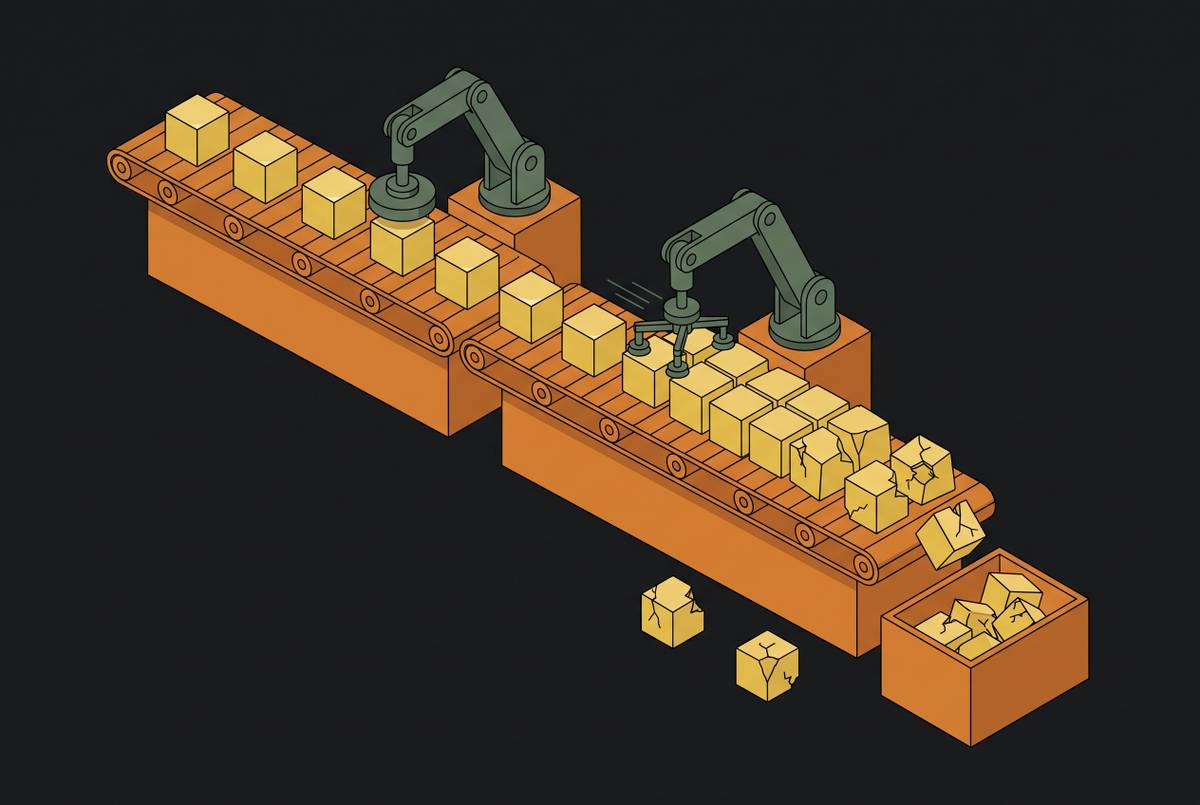
Premature certainty is a construction delivery risk created when an approved budget or signed schedule starts to stand in for evidence of what can be delivered. Once an organisation has to defend what it has declared, signs that conditions have changed carry less weight, and the gap between the plan and physical reality can grow before it is formally recognised.
How construction certainty became a structural fiction
The lag effect begins when a project’s declared position becomes harder to change than the conditions on which it depends. Approval sets a budget or completion date, but leaves open how much supply-chain capacity there is, how ready procurement is and how complete the design is. Those conditions can continue to move while the organisation reports against the commitment already made. Confidence then reflects the authority of the declaration.
Currie & Brown’s Construction Certainty Index identifies outdated procurement, misaligned objectives and a culture that accepts billion-dollar projects without complete designs as embedded sources of risk. These are features of how projects are initiated and managed. They lead to commitments before the information needed to back them up is available.
Currie & Brown’s Construction Certainty Index also reports that confidence has fallen for every project target it tracks, with fewer than half of organisations confident they will meet deadlines and only a minority confident they will stay within budget. That loss of confidence is consistent with a system whose commitments exceed its evidence. Better intent cannot correct the sequence in which certainty is declared before it has been earned.
Why cost plans look robust at exactly the moment they become unreliable
Cost planning exposes this sequence because the market does not transmit price pressure to every participant at the same time. Contractors see changes in supply-chain and subcontractor pricing before those changes appear in cost advice for clients or feasibility documents. A cost plan can look sound even though it uses conditions that will have changed by the time procurement starts.
Matthew Mackey, Director at Contollo Group, states the distinction directly. "You don't get cost certainty from a forecast, you get it from the decisions you make before you go to market". A forecast describes an expected position, whereas procurement decisions determine the exposure a project will carry into the market. Using a forecast in place of procurement decisions leaves the budget at risk between the time it is drawn up and the time purchases are made.
New policy costs make that interval more consequential. The UK steel trade measure from July 2026 reduced overall tariff-free import quota volumes compared with the previous safeguard regime, while the UK Carbon Border Adjustment Mechanism is due January 2027. Traditional inflation forecasting models leave these pressures out, so plans that use standard forecasting methods miss them in their usual inflation assumptions. When clients respond by deferring procurement or rescoping projects to preserve viability, the remaining window contracts. The attempt to protect the approved budget can therefore deepen the lag that made it unreliable.
Procurement timing, not site execution, is where the schedule is actually set
The same lag governs whether a programme can be delivered. Before site execution can meet a date, the project must turn what it intends for design, budget and procurement into commitments from the supply chain. Until that conversion occurs, a scheduled activity is not evidence that the necessary contractor or material will be available. By the time an absence becomes visible in the field, the decisions that caused it may be effectively locked in. Site progress is then revealing a constraint created upstream.
Contractor selectivity makes this conversion harder for projects that approach the market late. Contractors are favouring clearer programmes and lower-risk work, narrowing the bidder pool for structural and specialist packages. A client with unresolved procurement therefore has fewer options at precisely the point when flexibility matters most. The declared programme does not secure access to the capacity on which it depends.
Single-stage competitive tendering shows how a familiar way to control costs can put the schedule at risk. Reinforcement lead times or material availability can shift between design and tender, leaving the client to discover the change only when the supply chain is engaged. Late procurement is therefore more than an occasional failure to place an order promptly. It can be a structural consequence of the project’s chosen sequence of decisions. A schedule declared at financial close may already be unachievable because the procurement decisions needed to support it remain unresolved.
How a signed baseline schedule embeds rather than reveals risk
The CPM baseline schedule is the instrument through which these unresolved conditions can acquire institutional authority. Signing it establishes an agreed statement of intent, but does not by itself establish achievability. The distinction matters because a baseline is needed to assess performance, yet agreement on that reference point is not proof that its assumptions are sound.
Most baseline schedules fall short of quality standards at sign-off, and updates often include risky changes to actual dates. Both general contractors and owners have little confidence that those updates show what is happening on the project. The schedule can consequently remain the formal account of delivery while becoming a weaker account of what is happening. When designs are incomplete at commitment, the project starts without the information it needs for a programme it can rely on.
Once the baseline has been declared, deviations must be explained against it. That requirement creates an organisational incentive to absorb slippage quietly and maintain the declared position. An emerging constraint is no longer considered solely for what it means for delivery, but also for what acknowledging it would mean for the commitment. Updates then risk becoming a defence of the baseline. The document intended to reveal departure from the plan can instead help conceal its extent.
What distressed projects reveal about how far conditions had already drifted
Formal distress exposes the accumulated distance between that defended position and actual delivery conditions. By the time a dispute arises, divergence may have been compounding for months or years. The dispute is therefore a consequence of the gap. Its timing matters because evidence recorded at dispute should not be mistaken for a final account of project performance at close.
HKA’s CRUX Insight report shows the scale, with average sums in dispute at roughly a third of contract budgets and the extra time sought approaching two-thirds of the time planned. These measures of disputed cost and time leave final project costs and durations undetermined. Even with that distinction, they show how large unresolved exposure can become before it is formally confronted. Currie & Brown’s Construction Certainty Index also reports that a large share of projects have been delayed, descoped or have not progressed beyond planning in the past year.
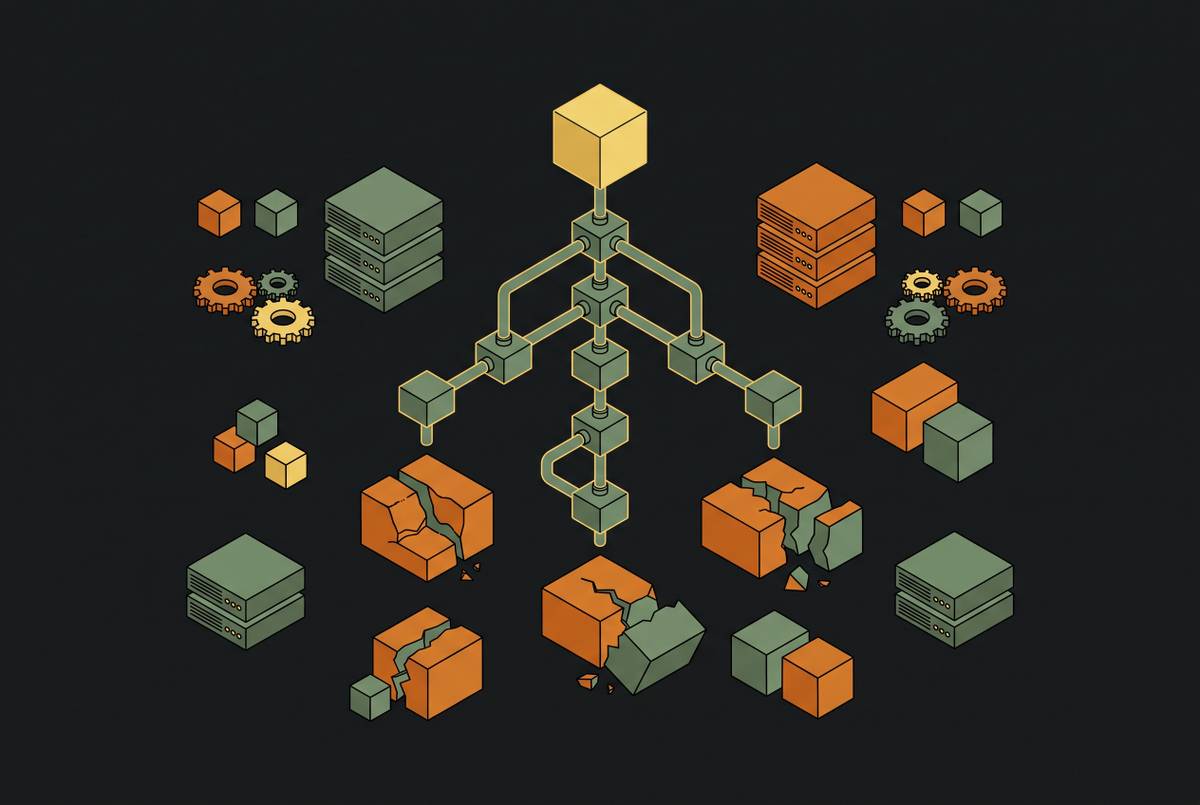
The mechanism that produces this distance can begin with a single dependency. A delayed subcontractor package can cascade into inspection sign-offs, fire strategy coordination, commissioning conflicts and frozen downstream work fronts. The original slip is local, but the programme is sequencing-sensitive. If that slip remains undisclosed, dependent work continues to be judged against conditions that no longer hold. What appears later as widespread distress can therefore reflect the propagation of an earlier divergence rather than a sudden failure across the whole project.
Where divergence accelerates fastest: energization and long-lead procurement
Energization and long-lead equipment make this propagation especially difficult to recover because physical lead times constrain what later construction effort can achieve. Large power transformers, medium-voltage switchgear and utility interconnection agreements extend well beyond what most schedules treat as standard procurement windows. Yet the decisions governing them can be treated as downstream matters. The project then commits to a completion date before securing the conditions that govern whether it can become operational.
Waiting for financial close before releasing equipment orders can add most of a year or more to energization, and potentially two to three years for large power transformers. On substation-class equipment, the sequencing mistake can add two years or more before a construction activity begins. No construction assumption needs to change for this gap to appear.
Keeping the original commissioning date in a programme cannot make equipment available. The cost is clear in the data center and mission-critical sector, where commissioning delays mean a large loss of revenue each month. The gap between declared completion and actual readiness is therefore priced even when the schedule has not acknowledged it. For operations leaders examining their programmes, energization and long-lead procurement provide a concrete test of whether the critical path reflects physical constraints or only the intended construction sequence.
Why higher-maturity organisations close the gap and what actually makes the difference
Digital investment offers a serious response to this problem, but only when better information can change decisions. Currie & Brown identifies a higher-maturity group representing roughly a third of respondents that invests strategically in AI, digital technology, data analytics, sustainability, skills and training. These organisations are notably more confident about meeting deadlines than the rest of the sample. The distinction is the process discipline needed to act on early signals.
An AI system that reorders stock or flags schedule risk on a bad signal can amplify disruption. Digitising a flawed process can produce flawed outputs faster, without improving the decisions those outputs support. Even accurate information has limited value if the organisational response is to absorb slippage and maintain the declared position.
DPR’s Q2 2026 market report found that owners put more weight on delivery certainty and procurement planning than on faster schedules. Earlier collaboration between designers, contractors and trade partners is the mechanism for managing that risk. It brings procurement conditions into the decisions that shape the programme before approval. Technology can support that discipline, but cannot substitute for it. Higher maturity closes the gap when organisations both detect divergence and allow its implications to change how the project is run.
What field evidence reveals that declared plans suppress
The practical distinction is between evidence of commitment and evidence of capability. A signed schedule, approved budget or stated readiness records what the organisation has agreed to deliver. Procurement data, equipment order status, subcontractor capacity and interconnection queue position show what can be done in the field. Those accounts can differ without a warning in the formal schedule. The declaration captures what was achievable to commit to at signing, while field evidence exposes whether the conditions needed for delivery exist.
A system status can therefore look acceptable while the completion date has already become unachievable. Work-in-progress may not have moved and no formal schedule flag may have been raised, yet actual lead times or capacity constraints may have changed. The absence of a warning may show that the process has not converted field conditions into an acknowledged change in outlook.
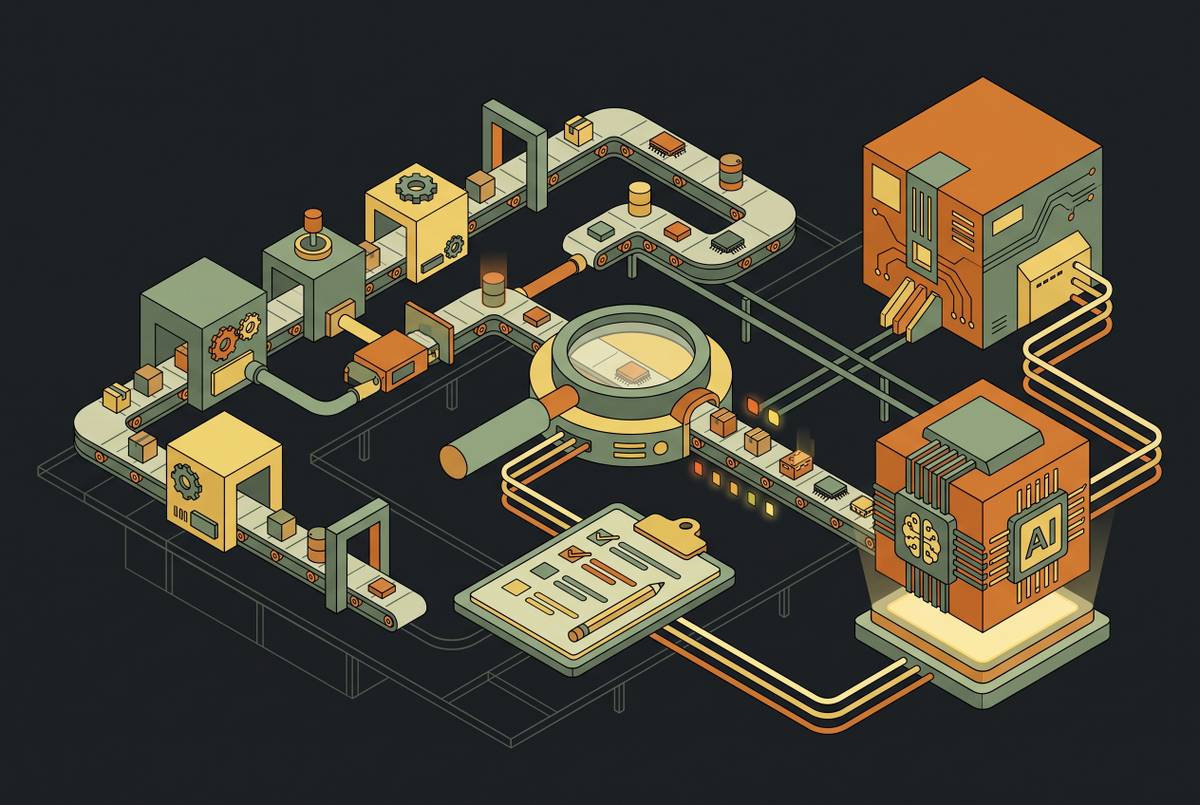
For operations leaders, the operational implication is a process audit that examines how work actually runs, where it hurts and what the field evidence shows. Its purpose is not merely to compare reported progress with an approved date, but to expose divergence that the declared plan does not reveal. That examination also brings the lag itself into view, including the distance between a changed condition and the decision made in response. Premature certainty loses its authority when commitments are tested against evidence. A process audit is the starting point for making that distinction part of delivery discipline.