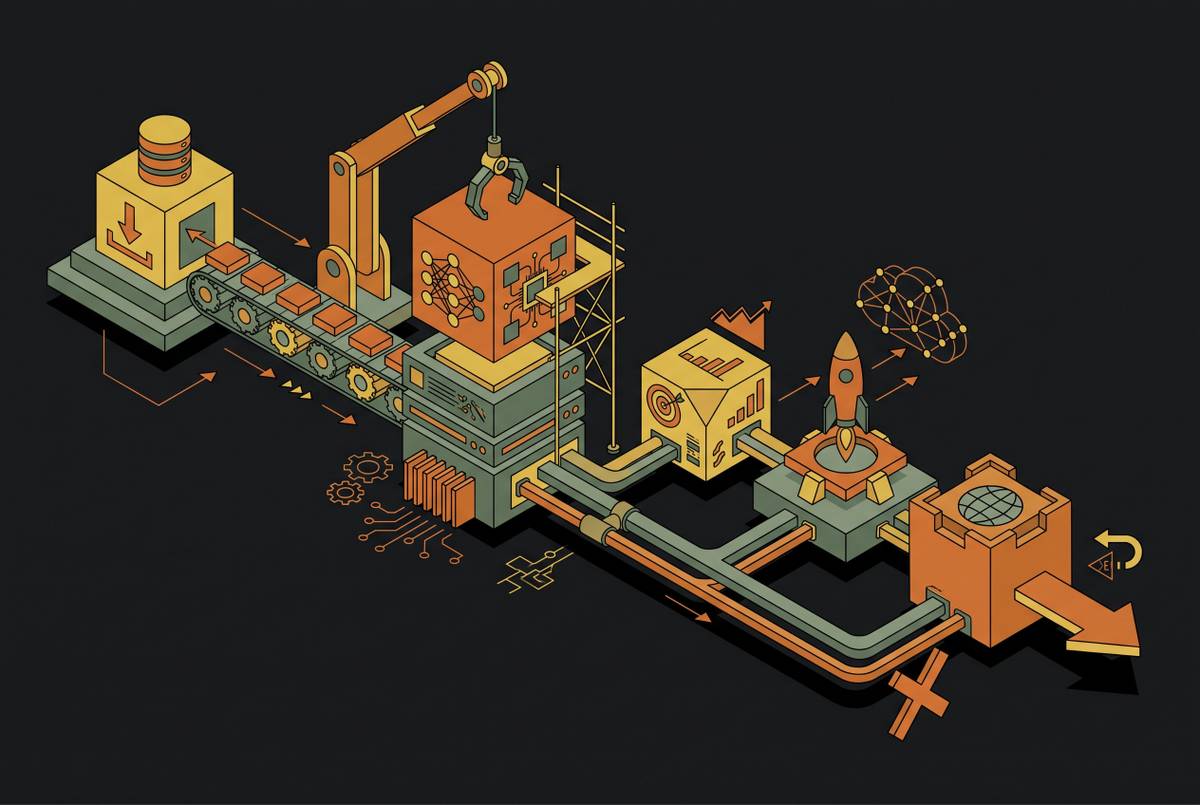
The Platform Roadmap Trap That Stalls AI Adoption in Asset-Heavy Operations Before a Single Process Changes
Starting with a specific broken process beats choosing AI platforms before understanding the work.
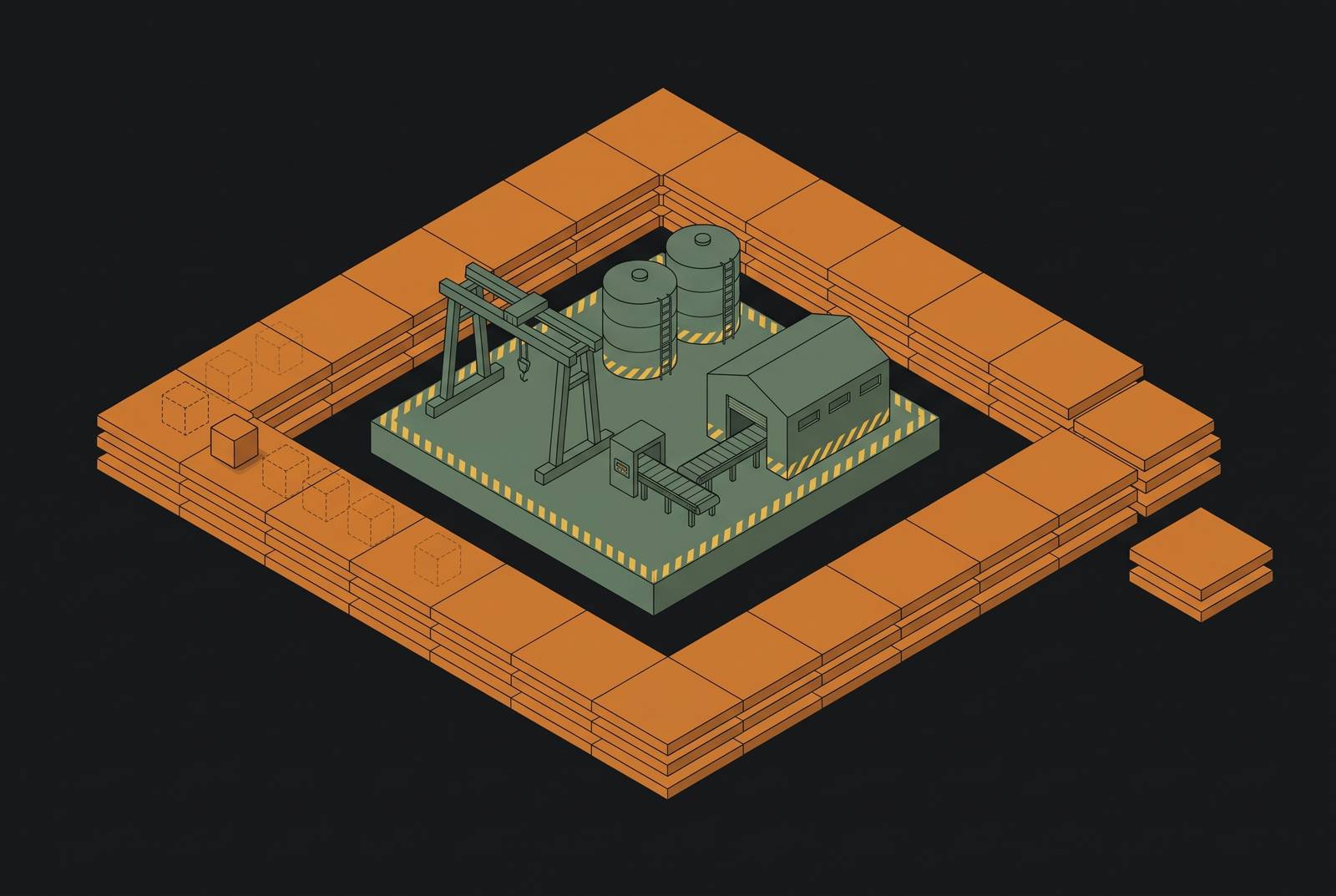
AI operations transformation in asset-heavy industries can start without an enterprise platform strategy. The effective sequence is to identify one painful, high-leverage process, understand and rebuild how it works, and then choose tools to serve it. The platform roadmap trap reverses that order, committing the organization to technology before it has committed to changing any specific work.
Why asset-heavy operations keep declaring AI strategies that never change a single process
An organization can have an AI strategy, active pilots, and a growing use-case pipeline while its operations remain unchanged. Procurement still waits on the same handoffs. Workers still re-enter data, and field teams still handle the exceptions that the formal workflow does not cover. The visible program advances, but the work underneath it does not.
McKinsey’s 2025 State of AI report found that most respondents use AI in at least one business function. Yet only a minority of production deployments keep improving a defined business outcome. These are different measures of adoption. Using AI somewhere in an organization does not establish that a specific operational process has improved, and adding pilots without changing processes widens that gap. In asset-heavy operations, fragmented data and field conditions that depart from plans make the distinction especially sharp.
How the sequencing error works when technology is selected before the broken process is named
It starts when leaders say AI is a priority. Platforms are then evaluated for their capabilities, and one is selected before the organization has identified the work it most urgently needs to repair. Only then are teams asked to suggest use cases. Those proposals must now fit a technology decision that has already been made, rather than determine what technology the work requires.
That reversal changes the question being answered. Teams ask where they could use the chosen platform instead of which painful process would make the biggest difference to operations if fixed. A proposal can satisfy that question without addressing the failure that consumes the most time or creates the most disruption. The platform never quite fits the work that matters most. ModelOp’s 2026 benchmark found that most enterprises have large numbers of proposed use cases but fewer than 25 AI systems in production.
The strongest defense of this approach is that a platform strategy prevents fragmentation and technical debt. That concern is legitimate at scale. It does not, however, resolve the immediate problem of having no redesigned process in production. At that stage, fragmentation is a prospective risk, while stalled adoption is already an operational fact. The alternative sequence starts with the process, establishes exactly how it breaks, and lets that evidence constrain the choice of tools.
Why this error is harder to avoid in construction, logistics, and manufacturing than in other industries
Asset-heavy work exposes the mismatch because its conditions are less uniform than a general enterprise platform may assume. Construction supply chains span multiple supplier tiers, lead times fluctuate, and field conditions repeatedly depart from plans. The work is not a stable demonstration environment. A platform chosen before those conditions are understood rests on assumptions that may not hold when the process runs.
Data fragmentation makes it harder to close that gap. Relevant information sits across ERPs, CRMs, spreadsheets, and third-party platforms, with inconsistent schemas and missing lineage. In construction and logistics, this is a baseline condition. When a process crosses those boundaries, model stability depends on more than how well the technology works with a prepared dataset. It depends on the information available where the work actually happens.
Procurement shows how these constraints meet live operations. Governance requirements, legacy-system integration, and the difficulty of changing work while it continues all slow deployment in a function that affects construction scheduling and energization readiness. A sequencing error therefore reaches beyond the software. It runs into physical dependencies that may never have been checked when the platform’s capabilities were assessed. Selecting technology without understanding these dependencies makes the wrong starting assumptions more costly.
The “data readiness first” response that becomes its own version of the trap
The objection that AI needs reliable data is correct. Inconsistent inputs, missing lineage, and gaps in governance still need to be addressed even when a problem in the work is urgent. The dispute is about scope and sequence. A requirement to make the data reliable for one defined process is different from a requirement to unify and govern enterprise data before any process can change.
A platform program gives way to a multi-year foundation project, while the painful workflow continues to run as before. The prerequisite becomes the program. ModelOp’s benchmark shows that the share of respondents using a governance platform rose sharply between 2025 and 2026, but using governance technology does not show that the work has changed. Recognition of a gap and repair of a process are separate achievements.
Programs that escape this pattern scope the data work to the process they intend to rebuild. They improve that data as they move toward deployment, without waiting until data across the enterprise is ready for any deployment to begin. This is a narrower form of rigor. The process supplies a concrete boundary for deciding which information and controls are needed. Without that boundary, the work needed for readiness can keep growing with no clear result for operations.
What the production gap actually looks like when it is measured at the process level
For the program, proposed use cases and counts of pilots show that work is underway. At the process level, the question is whether the system can operate within the actual workflow and improve its outcome. That is a different test. A pilot built on temporary data extracts in an isolated sandbox does not encounter all the live-system, compliance, and cross-team constraints that production introduces. Its success can therefore leave the sequencing error undetected.
With AI agents, this gap is especially easy to see. A single-task tool can demonstrate a bounded capability without traversing a complete operational process. An agent intended for procurement, scheduling, or logistics coordination must move through the actual steps and dependencies. An undefined handoff becomes a deployment problem. The difficulty is not adequately explained by reluctance to adopt AI when the pilot never represented the work people would need it to perform.
McKinsey research cited in the benchmark found that AI high performers fundamentally reworked processes at a rate roughly three times that of others. That finding places process redesign close to the distinction between experimentation and operational performance. It supports a structural diagnosis, while leaving room for different causes of failed pilots. A demonstration of technology and a rebuilt process are different deliverables, and the production transition exposes which one the program has actually produced.
How to use AI to fix one broken operations process without buying a whole platform
The corrective sequence begins with a concrete question about which process, if fixed, would remove the most operational pain right now. Teams must watch the work to answer that, rather than just gather suggested use cases in a conference room. Visibility is not the same as leverage. In construction and logistics, procurement cycle time, energization readiness coordination, and subcontractor data handoffs can be more failure-prone than the scheduling layer reported to leadership.
A process audit means following how that work actually runs. It identifies where work stops, waits, or gets repeated, where errors compound, and where a person re-enters information that already exists elsewhere. Documentation alone is not enough. The audit must distinguish the stated workflow from the steps and exceptions that consume team time. Otherwise, the organization may design for the official process and leave the broken one as it is.
Those observations should define the redesign before tools are selected. A known failure in a handoff needs a defined resolution. Repeated data entry needs to be fixed in the work itself, while a new report can leave it hidden. Teams then judge a tool by how well it serves the redesigned process, rather than by its promise to cover a wide range of future use cases.
This narrower starting condition keeps the first deployment focused. It supports time-to-first-production in weeks rather than quarters because the program is working toward a defined operational change. It also preserves the distinction between improving a process and demonstrating a model. Bottom-line impact depends on embedding AI directly in the work, rather than running it as a standalone capability or a parallel reporting layer.
Why AI agents inside the workflow accelerate what platform-first approaches cannot
Once the process has been rebuilt, an embedded agent can act within it. An agent can route a procurement exception, flag a scheduling dependency, or trigger a compliance check as part of the workflow. A reporting-layer system instead produces an output that a person must act on through a separate system.
For procurement-to-award, materials coordination, and energization sequencing, integration places the agent inside the actual sequence of steps. There, it runs into dependencies that an isolated pilot can avoid. This is also why process definition must come first. Narrow, contained agentic tasks are production-ready, but multi-step orchestration across live systems needs a process whose steps are clear. An undefined process cannot be orchestrated simply by choosing a more capable agent.
Integration depth allows value to compound because the system acts within core operations rather than leaving each output to be translated into action elsewhere. The architecture follows the redesign. It is not a substitute for deciding how the process should work, which exceptions it must handle, or where its handoffs break. Organizations that add agents to broken workflows without changing them can get broken outputs faster, including confident wrong answers at scale. Faster execution is an improvement only when the work being executed has been made sound.
The field evidence test for rebuilding operations rather than performing transformation
The practical diagnostic is whether a specific, previously broken process runs differently at the point where work happens. A roadmap cannot answer that question. Announced use cases and pilot counts describe the program, but they do not establish a change in operations. The relevant evidence is observable within the process, rather than inferred from the amount of AI activity surrounding it.
That evidence can take several concrete forms. A decision that previously required manual data retrieval now happens within a defined time window. A handoff that broke at a known point now has closed-loop confirmation. A worker no longer has to re-enter data from one system into another. Each example identifies a change in the work itself, making it possible to distinguish an operational result from a new demonstration or reporting interface.
Meaningful-review rate measures whether the changed work produces dependable outcomes. Field reports need corroboration from downstream results. What the operations team says has changed in the work should match changes in lead times, error rates, escalations, or re-work loops. A quarterly steering committee cannot substitute for that agreement between the people running the process and the outputs it produces.
For an operations leader assessing a platform program, the first weeks offer a direct test. If no specific painful process has been named, redesigned, and deployed against, the program is performing transformation. The sequencing error is already visible. The assessment must identify which previously broken process now runs differently and what evidence at the point of work shows that it does.